
- Posted on
- • News
NATO Clarifies Treaty Contains No Expulsion Mechanism After Pentagon Email Threatens Spain With Removal
- Author
-
-

- User
- Spain Updates
- Posts by this author
- Posts by this author
-
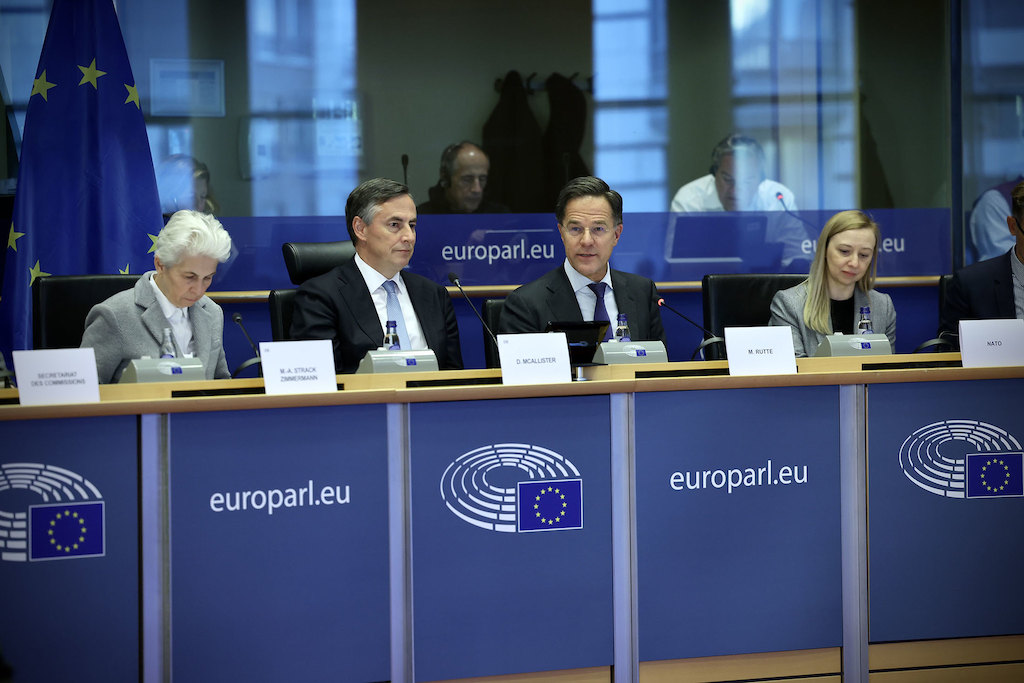
BRUSSELS/MADRID — The North Atlantic Treaty Organization has formally clarified that its founding charter contains no provision for suspending, expelling, or limiting the participation of any member state, responding to revelations of an internal U.S. Department of Defense email that floated the unprecedented possibility of removing Spain from the alliance.
The statement, issued Friday by a NATO spokesperson to Europa Press, comes after Reuters published details of a leaked Pentagon message outlining potential punishments for allies that declined to participate in U.S.-led military operations against Iran—a campaign strongly advocated by former President Donald Trump.
NATO's Legal Position: No Expulsion Clause
"The North Atlantic Treaty does not contain any provision relating to the suspension of membership, expulsion, or limited participation in the organization," the Alliance spokesperson stated when questioned about the matter.
The only mechanism for a country to leave NATO is voluntary withdrawal, as outlined in Article 13 of the Washington Treaty. This article specifies that any member may cease to be part of the Alliance one year after submitting formal notice of denunciation to the Government of the United States—the treaty's designated depositary.
Legal experts note that this framework was intentionally designed to preserve Alliance cohesion during the Cold War, making unilateral expulsion politically and legally unfeasible without treaty revision—a process requiring unanimous consent from all 32 member states.
The Leaked Pentagon Email: What It Said
According to Reuters, which obtained details from a Pentagon official, an internal Department of Defense email circulated among senior defense officials discussed potential retaliatory measures against allies that refused to support U.S. military action against Iran. Spain was prominently featured in the document as a candidate for severe consequences, including possible expulsion from NATO—a measure described by analysts as "of maximum gravity" for transatlantic relations.
The email did not specify what legal or procedural mechanism the United States would invoke to pursue such an expulsion, nor did it outline a timeline or decision-making process. However, its circulation at high levels within the Pentagon has intensified diplomatic tensions.
When asked about the report, a Pentagon spokesperson, Kingsley Wilson, offered a pointed response: "As President Trump has said, despite all that the U.S. has done for our NATO allies, they have not been there for us. The Department of War"—the designation the Trump administration adopted for the Defense Department—"will ensure the President has credible options to guarantee our allies stop being a paper tiger and instead fulfill their obligations. We have no further comment on internal deliberations."
Notably, the Pentagon did not deny the authenticity of the email or explicitly rule out the possibility of pursuing Spain's removal.
Sánchez Responds: "We Don't Work Based on Emails" Speaking upon his arrival at the European Union summit in Nicosia, Cyprus, Spanish Prime Minister Pedro Sánchez dismissed the significance of the leaked communication.
"We do not work based on emails," Sánchez stated. "We work on official documents and positions formally adopted by the United States Government."
The Prime Minister reaffirmed his administration's commitment to Spain's international alliances and to operating strictly within established legal frameworks for military operations. His comments underscored a broader diplomatic strategy: engaging only with formal, state-to-state communications while declining to legitimize informal or speculative internal deliberations.
Spain's Firm Stance on Iran and U.S. Military Operations
The tension stems from Spain's unequivocal refusal to support U.S. military action against Iran. Shortly after the campaign began, the Sánchez government announced it would not permit the United States to use shared military installations on Spanish territory—specifically the air bases at **Morón **(Seville) and **Rota **(Cádiz)—for operations related to the conflict. Madrid also closed its airspace to U.S. flights connected to the Middle East campaign.
This position aligned Spain with several European NATO allies who similarly declined to participate in the operation, which was launched jointly by the United States and Israel on February 28 without prior NATO coordination. Under Article 5 of the Washington Treaty, members are obligated to assist one another if attacked, but the treaty does not compel participation in offensive campaigns initiated by a single ally.
A Deepening Rift: Defense Spending and Diplomatic Isolation The dispute over Iran has exacerbated preexisting friction between Washington and Madrid, particularly regarding defense expenditure. Former President Trump repeatedly demanded that NATO allies increase military spending to 5% of GDP—a target accepted by most European members but firmly rejected by Spain.
Since then, Trump has publicly criticized the Spanish government on multiple occasions, threatening tariff penalties and questioning Madrid's commitment to collective security. The potential expulsion scenario, while legally dubious, reflects the depth of this deterioration.
Sánchez has simultaneously sought to position himself as an international leader of the anti-war movement. At a recent summit of leftist leaders in Barcelona, he aimed to cement his role as a global reference point for diplomatic alternatives to military escalation—a stance that has drawn praise from progressive circles but further alienated Washington.
The Ormuz Strait Factor: Strategic Frustration in Washington The leaked email emerges at a delicate moment in the Iran conflict. Iranian forces have effectively closed the Strait of Hormuz—the critical maritime chokepoint through which approximately 20% of global oil shipments pass—limiting military options for the United States and its partners.
Beyond Spain's denial of base access and airspace, European NATO allies collectively declined Trump's call to participate in efforts to reopen the strait. This coordinated reluctance has fueled frustration within the U.S. administration, with Trump repeatedly stating that allies "have not been there for us."
While Trump has himself suggested the United States might consider leaving NATO if burden-sharing does not improve, the prospect of Washington initiating the expulsion of a founding European member represents a qualitatively different escalation.
Other Allies in the Crosshairs: The UK and the Falklands Question The Pentagon email reportedly extended beyond Spain, identifying other "difficult" allies for potential repercussions. The United Kingdom—historically America's closest partner—was specifically mentioned due to its abstention from the Iran campaign.
According to the document, one contemplated measure involved reviewing U.S. support for European allies' overseas territories in diplomatic disputes. The email explicitly cited the **Falkland Islands **(Malvinas), whose sovereignty is claimed by Argentina, as a potential leverage point in relations with London.
Trump has also directed sharp criticism at British Prime Minister Keir Starmer, questioning his courage and dismissing offers of cooperation made "after the war is already won." On multiple occasions, Trump has remarked that Starmer "is not Winston Churchill."
What Expulsion Would Mean: Legal, Strategic, and Political Implications
While NATO's treaty provides no expulsion mechanism, analysts have explored hypothetical scenarios:
Treaty revision: Removing a member would require amending the Washington Treaty, which demands unanimous ratification by all allies—including the target country.
Political isolation: The U.S. could attempt to rally other members to politically marginalize Spain within Alliance structures, though this would face significant resistance.
Bilateral decoupling: Washington could unilaterally reduce intelligence sharing, joint exercises, or defense cooperation with Madrid outside NATO frameworks.
Precedent risk: Any move toward expulsion could destabilize the Alliance by introducing conditionality into membership, potentially encouraging other members to reconsider commitments.
Most defense scholars consider actual expulsion highly improbable, but the mere discussion of the option signals a profound crisis in transatlantic trust.
Reaction Across Europe and Within Spain
European capitals have largely refrained from public commentary on the leaked email, though diplomatic sources indicate private concern about the precedent such rhetoric could set. Within Spain, opposition parties have used the episode to debate the government's foreign policy posture, with some urging greater alignment with Washington and others defending Madrid's sovereign right to decline participation in conflicts not endorsed by the UN or NATO.
Defense industry stakeholders have expressed anxiety about potential repercussions for joint programs, including Spain's participation in NATO missile defense initiatives and European fighter aircraft projects.
Looking Ahead: Diplomacy, Deterrence, and Damage Control
As the situation evolves, several questions remain unanswered:
Will the United States formally transmit any position on Spain's NATO status through diplomatic channels?
Could Spain seek reassurances from other major allies, such as Germany or France, to counterbalance U.S. pressure?
Might NATO initiate internal discussions to clarify membership obligations and dispute resolution mechanisms?
How will the outcome affect Spain's role in upcoming Alliance exercises and strategic planning cycles?
For now, both Madrid and Washington appear to be engaging in calibrated signaling: Spain emphasizing legalism and multilateralism, the U.S. underscoring expectations of burden-sharing and operational solidarity.
Key Facts
NATO Treaty: No clause permits expulsion or suspension of members; voluntary withdrawal only via Article 13.
Leaked Document: Internal Pentagon email discussed potential punishments for allies refusing to support Iran operations, including Spain's possible removal from NATO.
Spain's Position: Denied use of Morón and Rota bases and closed airspace to U.S. flights linked to Iran campaign.
Defense Spending Dispute: Trump demanded 5% of GDP; most European allies agreed, Spain did not.
Strategic Context: Iran's closure of the Strait of Hormuz has complicated U.S. military options and heightened frustration with allied reluctance.
UK Mentioned: Email reportedly flagged Britain for potential repercussions, including reevaluation of U.S. support on overseas territorial disputes like the Falklands/Malvinas.
Pentagon Response: Did not deny email's authenticity; spokesperson cited Trump's criticism of allies and promised "credible options" to ensure burden-sharing.
Popular Accusation Demands 24 Years in Prison for Begoña Gómez, Wife of Spanish Prime Minister
Background: Spain in NATO
Spain joined NATO in 1982 following the end of its military dictatorship, with membership confirmed by referendum in 1986. The country hosts two strategically vital U.S. military installations: Naval Station Rota, a key hub for U.S. Navy operations in the Mediterranean and for missile defense assets; and Morón Air Base, used for rapid deployment and aerial refueling. Spain contributes to NATO missions in the Baltics, the Mediterranean, and Kosovo, and participates in the Alliance's nuclear sharing arrangements.