
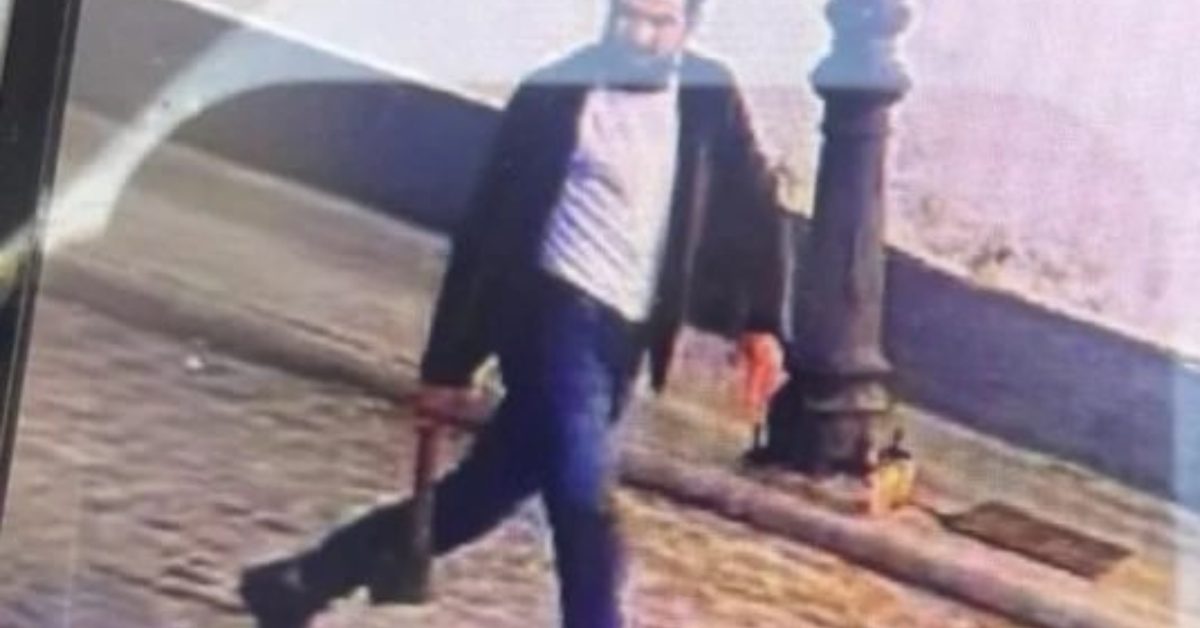
Moroccan Immigrant Arrested After Attacking Several Neighbors with an Axe in Granada
Moroccan National Arrested After Axe Attack On Three Neighbors In Montefrío, Granada; Investigation Into Possible Religious Motivation Underway
Hundreds of Moroccans Queue Outside Spanish Consulate in Almería to Apply for Naturalization
MONTEFRÍO, Granada — A 45-year-old Moroccan national has been detained by Spain’s Civil Guard following an axe attack on three residents in the town of Montefrío, Granada, on Easter Monday, prompting heightened security measures and an ongoing investigation into whether the assault was motivated by religious extremism.
The incident occurred shortly before 11:00 a.m. on Calle Fuerte y Pardo, located near Montefrío’s commercial district and the “Los Arrayanes” Active Participation Center. According to witness accounts and preliminary police reports, the suspect approached a 69-year-old local man in the public thoroughfare while wielding an axe and behaving erratically. The victim defended himself with a walking stick and, despite sustaining injuries, survived the confrontation.
Two female residents, aged 78 and 52, were subsequently attacked as they walked through the area—one returning from a health center and the other from a local market. According to local media reports, the women were caught by surprise and were unable to defend themselves effectively. Both sustained multiple axe wounds and collapsed at the scene. They were transported to the Virgen de las Nieves Hospital in Granada, where they remain in critical condition with a grave prognosis.
Witnesses described the attacker as acting with extreme agitation, striking indiscriminately until the axe handle eventually broke after hitting a vehicle window. At that point, the suspect fled the scene on foot. Local residents expressed shock at the violence, with one neighbor stating, “He was like a madman, hitting everything,” though he declined to provide his name due to concerns about potential retaliation.
The Civil Guard of Granada immediately activated an extensive search operation upon learning of the attack. Patrols from the Loja company, along with personnel from the Citizen Security Unit of the Command (USECIC), were deployed to the area. The search effort was supported by the Air Unit and drones from the Civil Guard’s Pegaso Team. The suspect was located approximately one hour later, around 12:00 p.m., in a rural area near the town and was subsequently detained without further incident.
According to sources close to the investigation, the detained individual is a seasonal agricultural worker of Maghrebi origin who had been living in Montefrío for only a few months at the time of the attack. He was reportedly employed in asparagus and olive harvesting campaigns, a common pattern among temporary migrant workers in the region. Sources confirmed that the suspect was not officially registered as a resident of the municipality.
Reports indicate that during initial questioning, the suspect told officers that he had acted after “feeling the call” and stated that “all Christians must die.” However, police authorities have emphasized that the investigation remains open and that no conclusive determination regarding motivation has yet been made. Officials have neither confirmed nor denied the possibility that the incident may involve a “lone wolf” actor inspired by jihadist ideology.
In response to the attack, the Civil Guard has significantly reinforced its presence in Montefrío as a preventive measure. In addition to citizen security units deployed immediately following the incident, the operation has been bolstered by the Reserve and Security Group (GRS) to deter any further disturbances and ensure rapid response to potential acts of violence or hostility.
Montefrío, a municipality of approximately 6,000 residents in the Loja comarca of Granada province, has experienced demographic changes in recent years with the arrival of seasonal agricultural workers from North Africa and other regions. Local authorities have generally sought to balance labor needs with community integration efforts, though periodic tensions have arisen regarding housing, public services, and cultural differences.
Under Spanish criminal law, attempted homicide, assault with a deadly weapon, and acts potentially motivated by religious or ideological extremism constitute serious criminal offenses carrying significant penalties upon conviction. Prosecutors will evaluate all available evidence, including forensic analysis of the weapon, witness statements, digital communications, and intelligence reports, to determine appropriate charges and procedural next steps.
The Spanish Interior Ministry and Civil Guard have reiterated their commitment to investigating violent crimes thoroughly and impartially, with particular attention to cases that may implicate public safety or ideological extremism. Coordination between local police, national security forces, intelligence agencies, and judicial authorities aims to ensure comprehensive examination of evidence and effective pursuit of those responsible.
For residents in affected communities, authorities have emphasized the importance of reporting suspicious behavior or concerning activity to police immediately to enable timely intervention. Community engagement and information-sharing remain central components of broader public safety strategies designed to address both immediate security concerns and longer-term preventive measures.
Migrant gangs violently attack innocent people in Spain
As judicial proceedings advance, prosecutors will review all evidence to determine whether formal charges related to terrorism, hate crimes, or other enhanced penalties are warranted.
🇪🇸 Manifestación de los vecinos de Montefrío (Granada) ante el BRUTAL ataque de un inmigrante magrebí con un hacha a dos mujeres y un hombre. pic.twitter.com/wQmUTuiIlX
— Actualidad Noticias (@Actualidad_Pol) April 6, 2026