
- Posted on
- • News
Vandalism Strikes the Temple of Debod, Madrid’s Unique 2,000-Year-Old Monument
- Author
-
-

- User
- Spain Updates
- Posts by this author
- Posts by this author
-
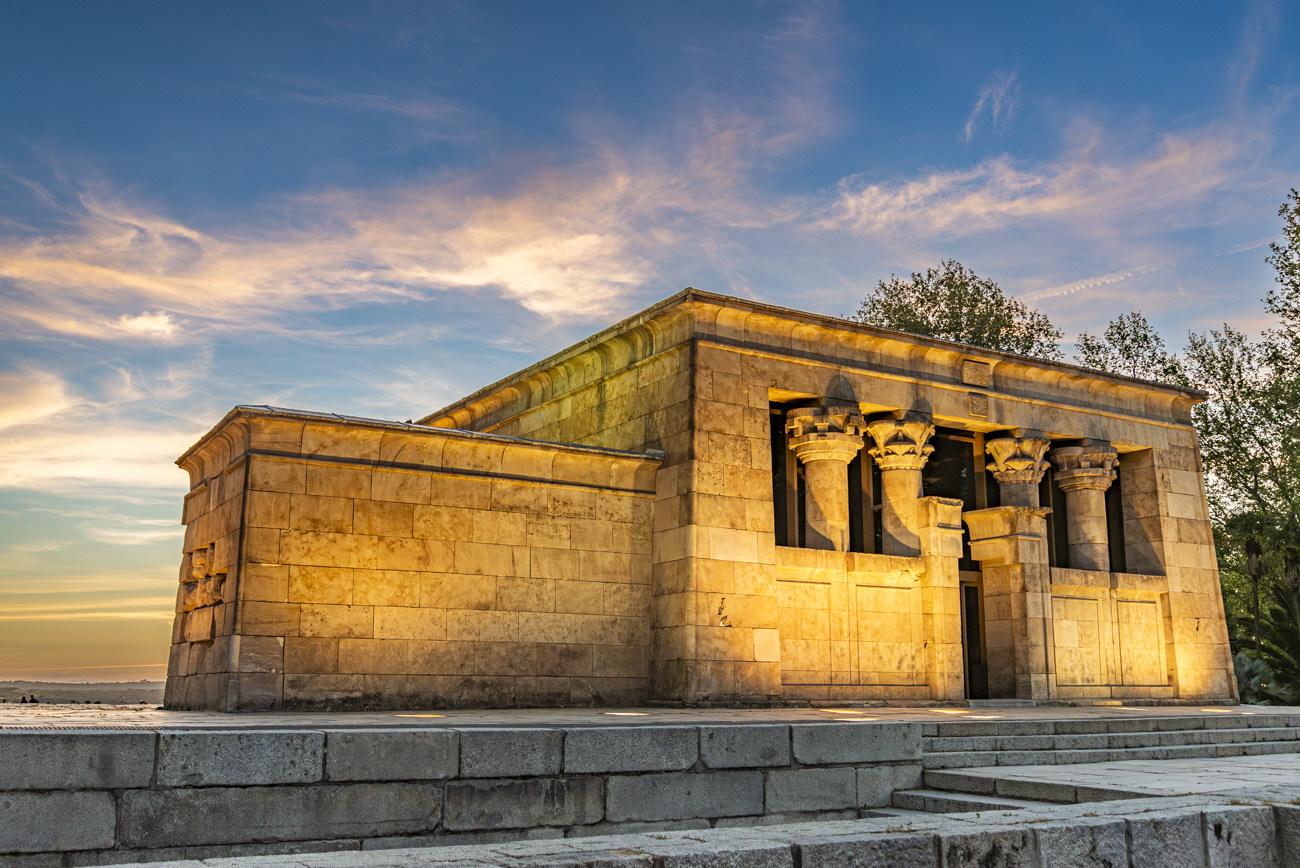
The Temple of Debod, one of the most unique historical sites in Madrid and a living testament to more than 2,000 years of history, is now showing visible signs of deterioration caused by acts of vandalism. Visitors can currently see inscriptions, scratches, and graffiti carved into the stones of its ancient portals — clear evidence of uncivil behavior by some who visit the monument.
Located in the Parque del Oeste, very close to Plaza de España, the Temple of Debod has become one of the most photographed landmarks in the Spanish capital. This authentic Egyptian temple, which was dismantled stone by stone and relocated from Nubia, faces the typical conservation challenges of any open-air monument: weather exposure, pollution, and constant foot traffic from tourists.
Unlike other temples of its kind, the Temple of Debod is fully integrated into a public park, which makes it easily accessible but also more vulnerable to wear and tear. In 2022, Madrid’s Deputy Mayor for Culture, Tourism and Sports, Marta Rivera de la Cruz, ruled out the possibility of covering or enclosing the monument. She stated at the time that a technical study had found the temple to be in “reasonable condition” and that covering it was “not even being considered.” “The stone of Debod undergoes periodic examinations so we can act if necessary,” she explained. “But for the City Council, the option of covering the temple is not on the table.”
11-Year-Old Boy Dies After Being Stabbed in Villanueva de la Cañada
In addition to natural factors such as climate, pollution, and heavy visitor traffic, the monument is now suffering from deliberate damage. Graffiti featuring symbols, names, and initials — completely unrelated to its Egyptian origin — can be seen on several surfaces. The absence of the traditional water basin (which normally acts as a physical barrier) has left the temple even more exposed.
During Holy Week, several witnesses reported attempts by tourists to enter the restricted areas without tickets, taking advantage of the empty basin. Security staff had to intervene, using whistles to force unauthorized visitors to step back.
Rivera de la Cruz stated at the end of 2025 that the Madrid City Council intends to “recover” the water feature surrounding the temple “as soon as possible.” The basin has suffered repeated leaks, which led to it being drained. A new project to restore the water is currently under consideration.
It is worth remembering that the Temple of Debod houses a free municipal museum. Visitors can request free tickets online to access the interior and learn about its rich history, as well as walk around the exterior and its characteristic Ptolemaic gateways.
Unfortunately, it is precisely on these ancient arches and interior walls that most of the vandalism is concentrated.
Historical Background
The Temple of Debod dates back to between 195 and 185 BC, when the Meroitic king Adijalamani ordered the construction of a small chapel dedicated to Amun of Debod and Isis in Lower Nubia (present-day Sudan). It was later expanded by the Ptolemaic pharaohs, who added sanctuaries, vestibules, crypts, and an upper terrace for rituals dedicated to Osiris.
During the Roman period, emperors such as Augustus and Tiberius added further decorations with reliefs depicting offerings to the gods. The temple survived centuries of history until it faced its greatest threat in the 20th century. The construction of the Aswan High Dam in the 1960s put numerous Nubian temples at risk of being submerged.
Thanks to an international UNESCO campaign to save them, and in gratitude for Spain’s help — particularly in the rescue of Abu Simbel — Egypt donated the Temple of Debod to Spain in 1968.