
BRUSSELS, Belgium – Leaders of twenty-two European countries have warned that policies such as the regularization of a very high number of immigrants can act as pull factors, directly linking the recent migration crisis in Ceuta to a Spanish Supreme Court ruling. The court recently confirmed that Spanish immigration law does not permit so-called “hot returns,” a resolution the signatories claim has been exploited to trigger the crisis and abuse the European migration and asylum system.
Italy Suspends Schengen Agreement with Spain
In a formal letter addressed to European Council President António Costa, European Commission President Ursula von der Leyen, and Irish Prime Minister Micheál Martin, whose country currently holds the rotating presidency of the EU Council, the signatories demanded an urgent videoconference of the bloc’s interior ministers. They warned of their willingness to reinforce or reintroduce temporary controls on internal borders to mitigate the risk of secondary movements, despite the fact that no unauthorized displacement from the autonomous city to the rest of Europe has been detected. The leaders cautioned that the European Union cannot allow uncontrolled mass crossings, the instrumentalization of migration, or other hybrid threats to create the perception that illegal entry into the bloc is possible.
The coalition of leaders expressed particular concern that the perception of illegal entry eventually leading to legal residency could encourage new crossing attempts, weaken trust in the common migration policy, and create repercussions for all member states. Consequently, they argued that the EU has a duty to effectively deter and relentlessly combat illegal migration by coordinating actions, strengthening external borders, and addressing any policies that might serve as pull factors.
The letter was signed by the leaders of Italy, Germany, Austria, Belgium, Bulgaria, Croatia, Cyprus, Denmark, Slovakia, Slovenia, Estonia, Finland, Greece, Hungary, Latvia, Lithuania, Malta, the Netherlands, Poland, the Czech Republic, Romania, and Sweden. Several of these nations have previously called for a tougher European response, with some, including the government of Italian Prime Minister Giorgia Meloni, advocating for the restoration of internal border controls or even studying the suspension of Spain from the Schengen area. In stark contrast, France has absolutely rejected this possibility. French Interior Minister Laurent Nuñez emphasized the very strong bilateral cooperation with Spain on migration matters, distancing his country from the initiative. Ireland, Luxembourg, and Portugal also declined to join the letter.
🔴🇪🇺 IMMIGRATION
— Jon De Lorraine (@jon_delorraine) August 1, 2026
22 pays de l’UE ont signé la lettre portée par l’Italie et le Danemark pour renforcer les frontières extérieures et accélérer les expulsions.
Les cinq États qui n’ont pas signé :
❌ 🇪🇸 Espagne
❌ 🇫🇷 France
❌ 🇮🇪 Irlande
❌ 🇱🇺 Luxembourg
❌ 🇵🇹 Portugal
Les 22… pic.twitter.com/9TrJzuGvby
Despite their criticisms, the signatories welcomed the cooperation between Spain and Morocco in ensuring the rapid return of those who entered Ceuta, expressing confidence that the situation would be brought completely under control with the backing of the European Union. They urged the Irish Presidency to urgently convene an extraordinary meeting of interior ministers to conduct a common assessment of the crisis, agree on a coordinated response, and rapidly mobilize available community instruments to help Spain restore effective control of its external border.
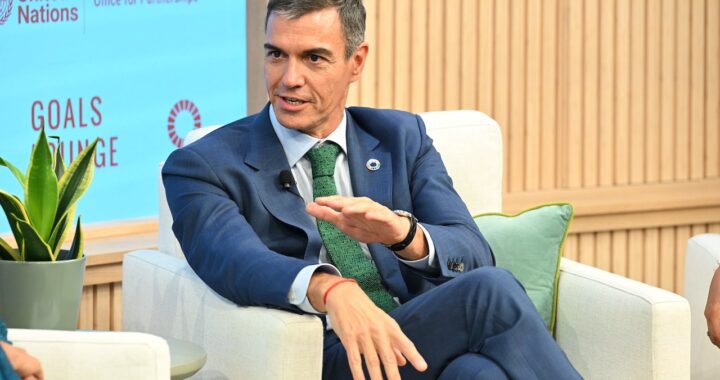
Spanish Prime Minister Pedro Sánchez had already made a similar request to European institutions hours earlier, seeking a common response to the crisis. Sánchez expressed serious concern over the reaction of certain European governments, denouncing what he described as an asymmetric response driven by prejudices, fake news, ignorance, or political interests. He strongly criticized executives that chose to attack Spain and demand its temporary exclusion from the Schengen area, a position he deemed contrary to European law and the principles of community solidarity. Sánchez defended the joint management of the crisis with Morocco, which he noted allowed for the return of practically all migrants who crossed irregularly and prevented any subsequent unauthorized movement toward continental Europe.
European Commission President Ursula von der Leyen confirmed receiving letters from several leaders and welcomed the request for an extraordinary videoconference to assess the situation. Emphasizing that the fight against illegal migration requires solidarity and a united European response, she highlighted the rapid return of the vast majority of those who crossed into the Spanish enclave as a positive development. Von der Leyen stated this demonstrates that the EU possesses a solid external border control system, though she acknowledged it must be further strengthened and maintained through close coordination among all authorities.
Spain’s Interior Minister Praises Morocco, Criticizes Italy Over Ceuta Migrant Crisis
However, sources from the Irish Presidency of the EU Council clarified that, for the time being, only a meeting of the European Integrated Political Crisis Response mechanism at the expert level is scheduled for Saturday, followed by a meeting of the Twenty-Seven ambassadors next Monday. An extraordinary convocation of interior ministers has not yet been confirmed.